

I am the world
The long arc of mortality bends towards solipsism.

When I was 15, showers began to terrify me.
Shower is fancy lingo; English does not have a word for how we did it. We fetched cool water from the bathroom bucket with a round-bottomed bailer and rained it down our bodies. I always looked forward to the cold sinking its teeth into my scalp, to soft streams of water comforting the sides of my neck, and to the warmth as the water slid down my knees. Showers were relaxing and I relaxed, flooded by alpha waves, my body released from mind, my mind wide open to the world. Dreams came to me; possibilities seeped through the slits of my consciousness and enlarged my being. And sometimes, like a balloon sufficiently inflated, I’d experience a lift—consciousness untethered, rising, drifting through time and disembodied space.
Once, I drifted too far—so far back I smelled nothingness. It seems incredible to say, but there is nothing harsher than nothingness. I suspect this is because no one knows what it is, or has ever experienced it. Nothing has ever appeared before us ex nihilo, and everything we see—everything we are—is derived from what already exists, recombined in novel ways. To be is to be something; when we approach metaphysical nothingness, we draw closer to that which opposes us in the deepest possible sense. In my case, I surfed through time until I stood at the edge of my conception. I should have stopped there, like the men who, believing the earth a flat tabletop, feared sailing too far lest they fall off the surface of the world. But I pushed on and, behold, vacuum. And what did I do? I screamed the loudest I may have ever screamed.
This was not the same as contemplating history—that is easy. History is accessible because testaments allow us to reconstruct an experience, however imperfectly. This was different. This was the metaphysical act of situating oneself in the ontological field prior to existence itself. It meant asking: in the years before I was, who was I? It may sound silly now to look for yourself where you are not, but it made little sense that my consciousness simply did not exist until some unspecified time in the 21st century—especially given how much reality revolves around me. I close my eyes and the world goes to black. I turn left and the moon follows me. The stars twirl when I twirl. Everything exists somewhere, at some distance relative to me. I am the utmost reference point, the existential center of reality from which everything else takes its bearing. This is how I understand Wittgenstein’s remark in Tractatus: “I am my world.” The sun is above me and the woman I love I call my lover. If a tree falls in the forest and I neither saw nor heard it, it didn’t fall. If you sent a message and it never reached me, you didn’t send it. When I’m awake, the world is awake; and when I die, it is not so much that I am released from the world, but that I release the world from me.

Of course, none of this is scientifically true, but what I’m contending with is a particular conceit of the ego, i.e. the feeling that the i is eternal—or ought to be. This feeling persists vestigially, despite the ubiquity of death. I suspect this is one reason for the crosscultural popularity of afterlife myths; beyond the need to narrate reunion with loved ones when they pass, these myths also narrate the eternality of the self. We seem unable to reconcile the idea that this—all this self—will someday extinguish.
I suppose ancient observers of the interplanetary dynamic between earth, moon and sun, developed the geocentric model of the solar system for similar reasons. For them, it was intuitive to place Earth at the experiential center of the universe, around which suns and moons revolved, and for whose benefit stars twinkle and dote. The Copernican revolution shifted this reference point to the Sun and, later, abstract space and time itself became absolute frames of reference in themselves. In contemporary science however, as Arendt notes in The Human Condition, it is equally valid to say that the earth turns around the sun or the sun turns around the earth, for “both assumptions are in agreement with observed phenomena and the difference is only a difference of the chosen point of reference.” We no longer feel “bound to the sun.” We deem ourselves “universal beings”, moving “freely in the universe, choosing our point of reference wherever it may be convenient for a specific purpose.” Solipsism is, in a sense, what happens when this chosen reference point becomes the self. Perhaps the existential thunder that struck my 15-year-old consciousness was due to the irresolvable tension in the act of looking for a reference point while simultaneously looking through it.
I write this because, recently, I stood before the mirror and my mind cast itself into the vacuum of the future, a world without me. As before, I tried to find myself there. It’s a strange preoccupation, but I don’t know how else to account for the agony of non-existence if not by saying that the ego struggles to come to terms with the death of its centrality. It isn’t so much that I will miss specific sounds or feels, but that there will be no i to experience them. All reality filters through my senses and I half-dream it into being—what Schopenhauer called the world as representation. There is a sense in which my death is the death of all representation, as without the representational i, it is an open question whether or not reality takes place at all.
Wittgenstein thought that solipsism—the view that only your mind exists—is true in a limited sense, since the world is the totality of facts that can be represented in language, and language always has a point of view—the subject. Remove the subject, and what remains?
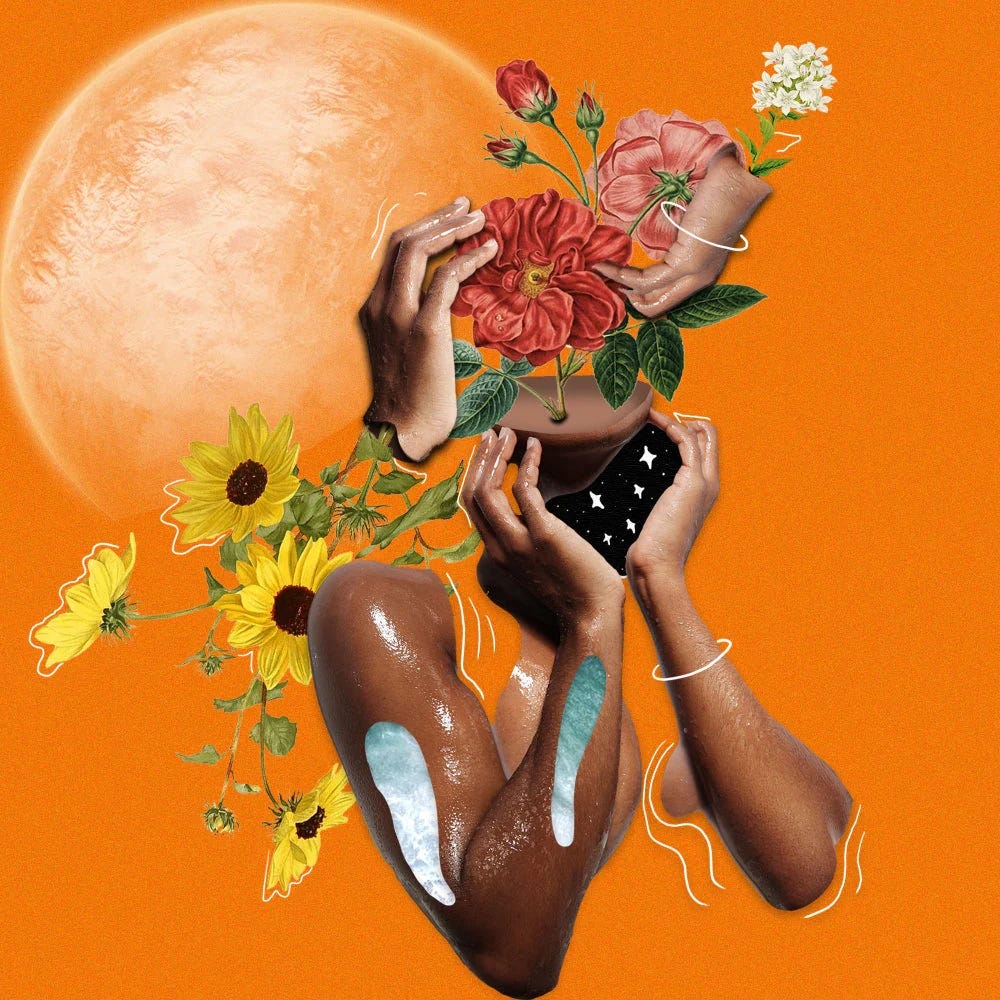
To be sure, solipsism is not a successful philosophy. It’s trivially true to establish that the world exists independent of your mind—science is perhaps even best understood as the discipline concerned with distilling truths that exist independently of mind. Yet mortality remains a terrible thing. It is, to paraphrase Arendt, the central category of metaphysical thought—the wheel around which all world-estranging thought turns. And what is death but the ultimate estrangement? As a species, we humans do not take kindly to death. We kick, scratch and claw until breath is gone, and then the loves we leave behind continue the struggle in grief. I have yet to formulate a complete mythology of my death. I have glimpsed fragments of the end, but random clips do not make a coherent and forceful narrative.
The question I think my consciousness is trying to answer, as it wanders across past and future time, is its place in the story of the world—what truly stands in reference to it, and what it stands in reference to. Perhaps my consciousness believes itself more fundamental than I acknowledge, which is why it keeps searching for itself temporally before and after i. This consciousness, my consciousness, that is more me than my body; that, in the Berkeleyan sense, is the only thing I ever truly experience.
Today, I bathe under an actual shower. I still wait for the same sensations: coolness dousing my scalp, the warmth at my feet. Occasionally, I hear the hum of the abyss of time stretched before and after me, feel its vastness squeezing through the pores of my skin. But I don’t scream. I don’t scream anymore.
Feels like this was a masterclass for my skin on how to experience multiple goosebumps within a short period.
Wrestling with my mortality is not new to me at all. There's a dread with which I interact with very old folks — It's the time right before the abyss, right before nothingness, "It's my ego struggling to come to terms with the impending death of its centrality".
There is a life which you give to our deepest thoughts and contemplations. There is an attention which you unwittingly — maybe not— invite us to pay. Thank you, brother. ❤️